Rudbar Rug History & Origin Guide
Rudbar rugs refer to hand-knotted wool rugs made in the village area of Rudbar-e-Hamadan in western Iran. These rugs form part of the wider Hamadan weaving tradition, which is known for durable village pieces with practical everyday appeal. Rudbar weavers developed a recognisable local style, so the name is used to identify rugs from this cluster of villages rather than the Hamadan region as a whole.
Region and background
Hamadan is one of Iran’s oldest and most established weaving areas, with dozens of villages producing rugs for local use and regional trade. Rudbar-e-Hamadan is one such village group. Weaving here has long been a household skill, passed through families and shaped by everyday life in rural western Iran.
Construction and materials
-
Technique: hand-knotted
-
Foundation: typically cotton warp and weft
-
Weave: usually single-wefted, a hallmark of Hamadan rugs
-
Pile: wool, cut pile
-
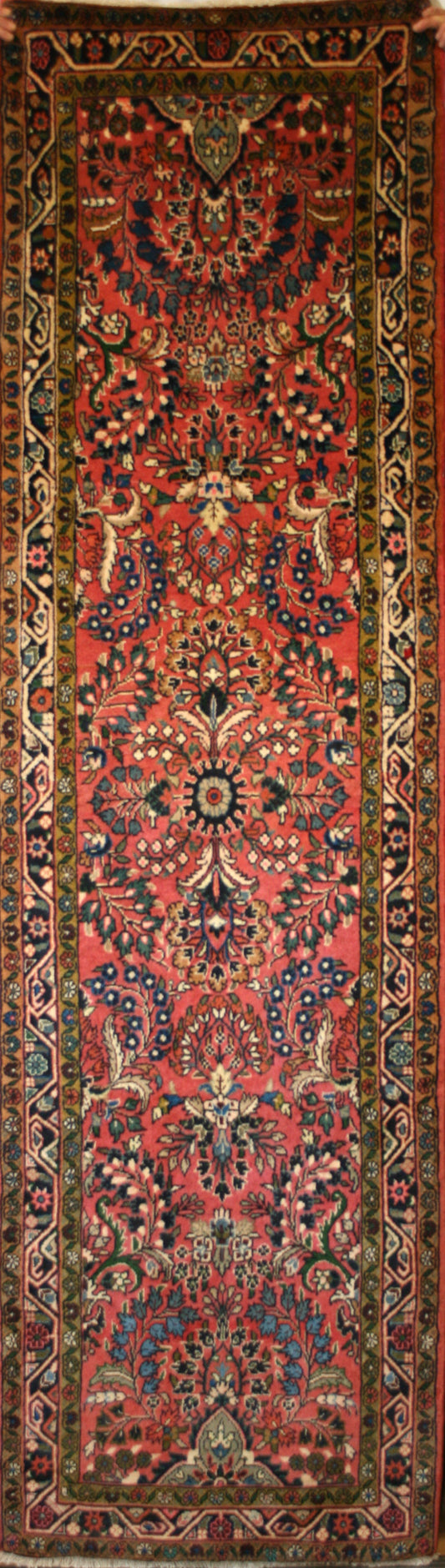
Typical formats: small and medium rugs, runners and corridor pieces
The single-weft structure and cotton foundation give Rudbar rugs a firm, practical handle suited to everyday living spaces.
Design and palette
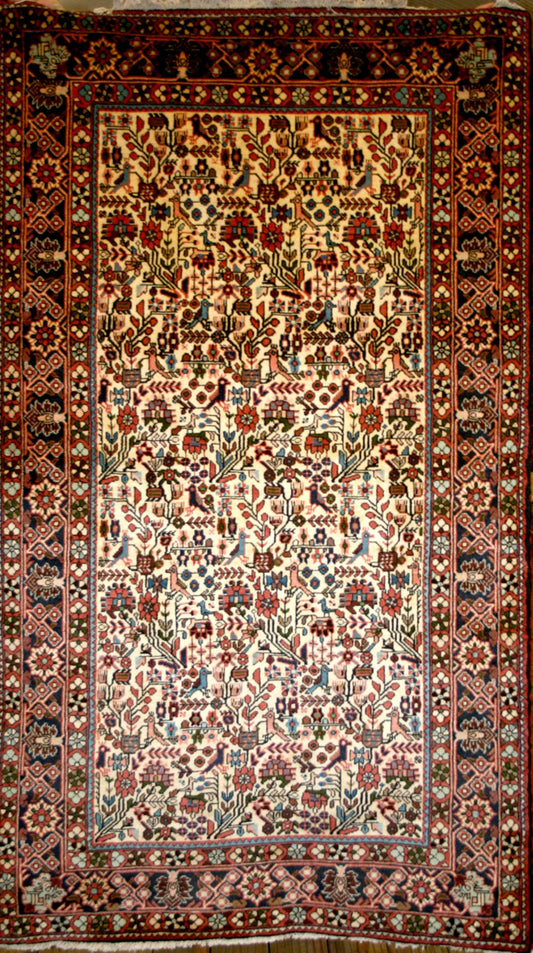
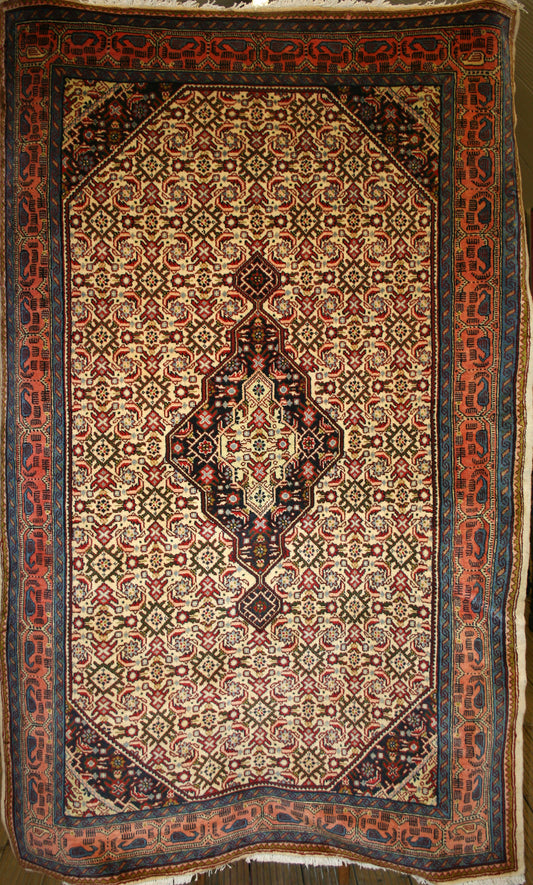
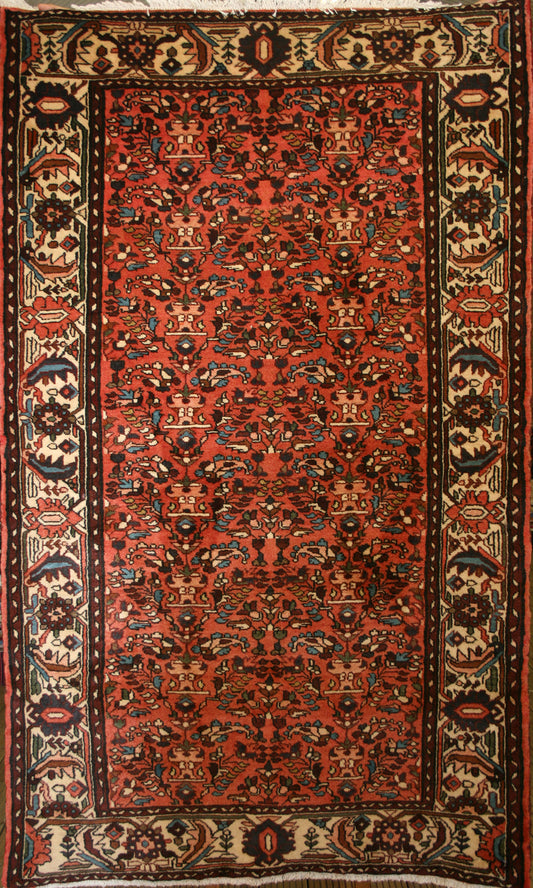
Rudbar-e-Hamadan rugs show stylised floral and geometric drawing, often arranged in balanced layouts. Common features include:
- Central medallions or stepped diamond motifs
- Repeating lozenges or compact all-over patterns
- Corner spandrels framing the field
- Simple village borders with rhythmic floral or vine forms
Colours typically include deep red and navy blue, with accents such as ivory, light blue, soft terracotta or gentle ochre. Older examples may show natural dye use and mellow, lived-in tones.
How Rudbar fits within Hamadan weaving
Although firmly part of the Hamadan group, Rudbar rugs have a consistent look that sets them apart from neighbouring villages. This includes compact compositions, neat outlining and a controlled, balanced feel that sits between rustic village charm and a more ordered aesthetic.
Not to be confused with other “Rudbar” places
-
Rudbar-e-Hamadan (western Iran): hand-knotted pile rugs, single-weft structure, village weaving
-
Rudbar (Gilan Province) (northern Iran): best known for flatweaves and kilims, culturally linked to Caspian and Talish traditions
-
Rudbar-e-Jiroft (Kerman Province) (south-east Iran): pile weaving influenced by southern and Kermani tribal styles, often double-wefted and visually distinct from Hamadan work
When people refer to a Rudbar rug, they almost always mean the village rugs of Rudbar-e-Hamadan.
Caring for a Rudbar rug
- Vacuum with suction only, avoiding rotating brushes
- Rotate every six to twelve months to balance wear and light
- Blot spills promptly and seek professional cleaning if needed
- Avoid damp storage and ensure good airflow
Frequently asked questions
Are Rudbar rugs durable?
Yes. They are village-woven wool rugs on a cotton foundation. With routine care and rotation, they can last for many decades in a home setting.
What makes Rudbar rugs different from other Hamadan pieces?
They share the classic Hamadan structure, but tend to show:
- More compact, balanced drawing
- Clear medallion or lozenge layouts
- Stylised floral details with defined outlines
These characteristics create a recognisable local style.
Do Rudbar rugs use natural dyes?
Older or semi-antique pieces may feature natural dyes. More recent examples often use high-quality synthetic dyes, which are common throughout Iran and chosen for stability and clarity of colour.
What rooms do Rudbar rugs suit?
Their warm colours and practical construction make them well-suited to living rooms, bedrooms, studies and hallways. Runners from this region are particularly popular for corridors.
Are Rudbar rugs good value?
They offer an accessible way to own a hand-knotted Persian rug with strong regional identity. Compared with more formal workshop centres, Rudbar rugs sit at an approachable level while retaining handmade character and cultural authenticity.
Do Rudbar rugs have symbolic meaning?
Most motifs reflect long-standing Persian decorative language rather than specific religious or ceremonial symbolism. Designs express village creativity and shared pattern heritage passed through generations.
Who might choose a Rudbar rug?
People who appreciate traditional Persian character, natural wool texture and timeless colour harmony often enjoy Rudbar rugs. They work well in both classic and relaxed contemporary interiors.