Heriz Rug History & Origin Guide
Heriz rugs belong to one of the most recognisable village weaving traditions of north-west Iran. Woven in and around the Heris district of East Azerbaijan, not far from Tabriz, they are admired for bold medallions, angular drawing, strong colour and a robust sense of structure. A Heriz rug rarely feels timid. Even when softened by age, it tends to hold a room with confidence.
Their character comes from an interesting meeting point. Heriz sits close to Tabriz, one of the great historic centres of Persian carpet weaving, yet its rugs are not simply country versions of fine city carpets. They take Persian design ideas - medallions, palmettes, rosettes, borders and floral forms - and render them in a more geometric, village-drawn language.
That is why Heriz rugs have remained so valued. They are decorative without being delicate, traditional without feeling overly formal, and strong enough in design to suit both old houses and more restrained modern interiors. Their appeal lies not only in durability, but in clarity, warmth and presence.
Heriz and East Azerbaijan
Heriz rugs come from Heris and the surrounding villages of East Azerbaijan, in the far north-west of Iran. The region lies within the wider Iranian Azerbaijan weaving area, close to Tabriz and not far from the mountain landscapes associated with Mount Sabalan.

This geography is important. Tabriz helped connect local weaving to larger markets and to the refined design language of Persian carpets, while the villages around Heriz preserved a more direct and angular way of drawing. The result is a rug tradition that feels both Persian and regional: connected to the urban carpet world, but never absorbed by it entirely.
Heriz should therefore be understood as a district tradition, not just as the output of one town. Names such as Gorevan, Mehraban, Bakshaish, Sarab and Serapi often appear in relation to the wider Heriz region. These terms can refer to nearby villages, qualities, styles or trade classifications, depending on period and dealer usage.
The Historical Development of Heriz Weaving
Local weaving around Heriz almost certainly existed before the rugs became widely known in the Western market, but the Heriz carpet type familiar today is especially associated with the 19th century onwards. This was the period when Persian carpet production expanded strongly for European and American buyers, with Tabriz playing a major commercial role.
As demand grew for large decorative carpets, Heriz-area weavers produced pieces that were practical, visually strong and well suited to Western rooms. These were not usually fine court carpets in the manner of Isfahan or Qom, nor were they purely tribal textiles. They occupied a useful middle ground: village-made or regionally produced carpets with formal Persian layouts and a distinctive north-western character.
The reputation of Heriz rugs developed from this combination. They offered the scale and order expected of Persian room carpets, but with a bolder, more architectural drawing style. Their medallions were large, their outlines firm, and their colours strong enough to carry across generous room sizes.
Wool, Structure and Handle
Classic Heriz rugs are usually hand-knotted with a wool pile on a cotton foundation. They are commonly associated with the symmetrical, or Turkish, knot, which is often found in north-west Persian and Caucasian-influenced weaving areas. Their handle is typically firm and substantial rather than soft and floppy.
This construction helps explain the practical reputation of Heriz rugs. They are often described as durable, but that should not be confused with crude or merely heavy. A good Heriz has structure, not just weight. The foundation, wool and knotting work together to create a carpet that feels settled and dependable underfoot.

Heriz rugs are not usually judged by extremely high knot count in the way a fine city carpet might be. Fineness can matter, especially in older and better examples, but the quality of a Heriz is better assessed through the balance of the design, the strength of the wool, the clarity of the colour, the condition of the foundation and the confidence of the drawing.
Silk Heriz rugs do exist, particularly where Tabriz influence is present, but silk is not the defining feature of the tradition. For most buyers and collectors, the classic Heriz is a wool rug: practical, handsome and made with a physical character that suits real domestic use.
The Heriz Design Language
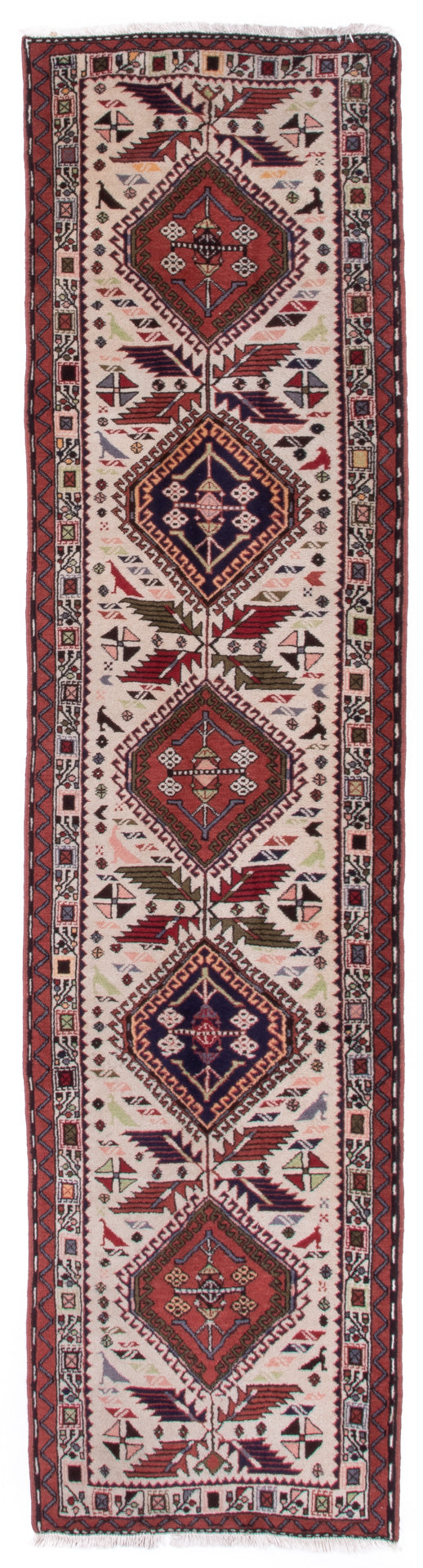
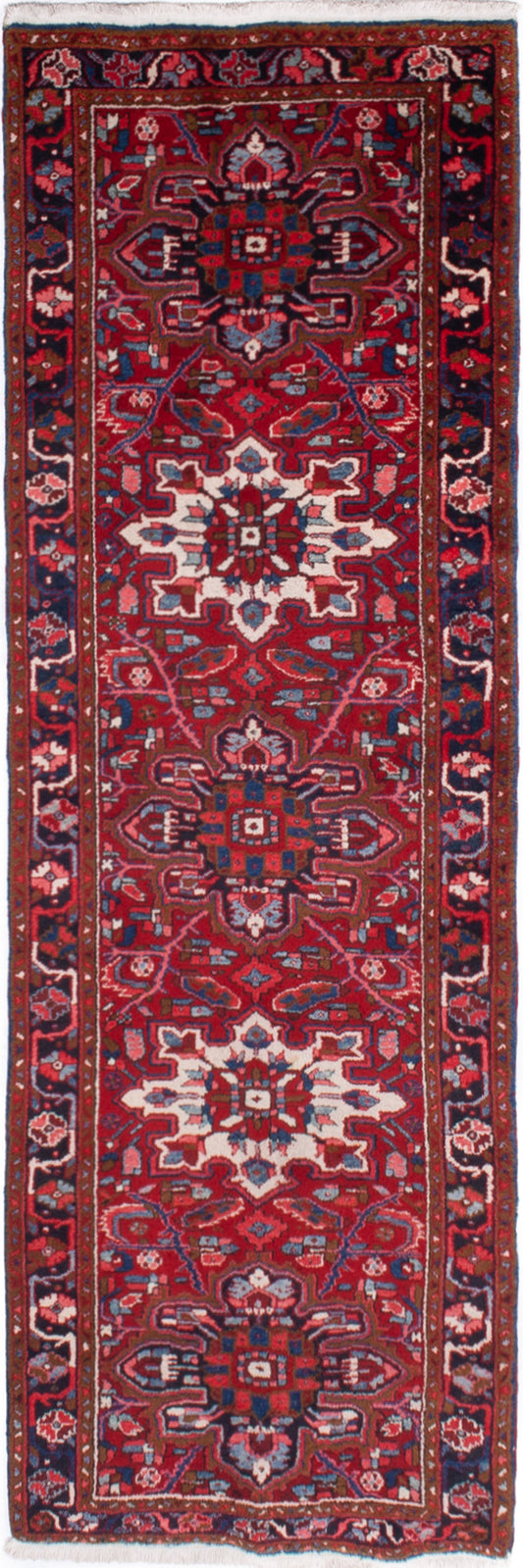
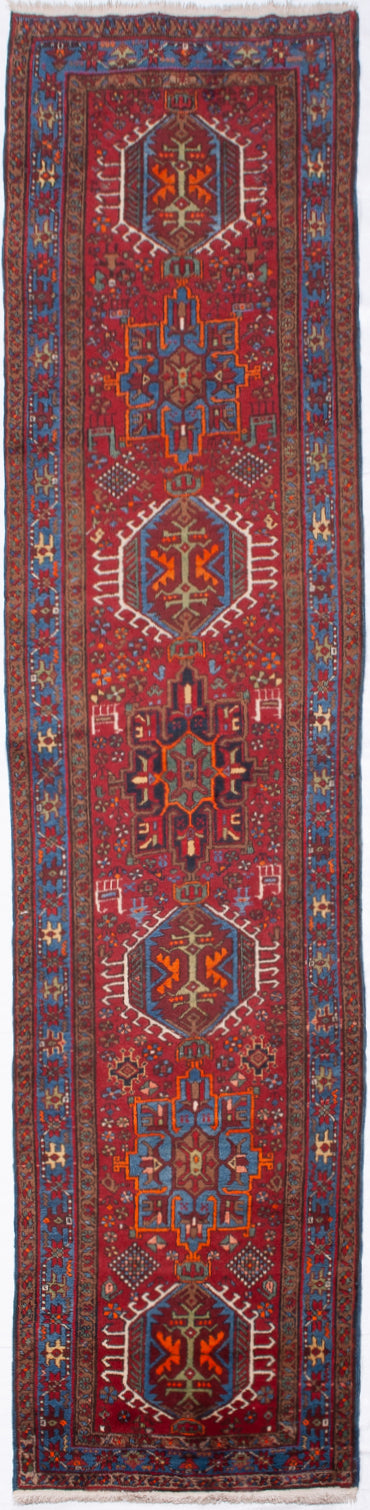
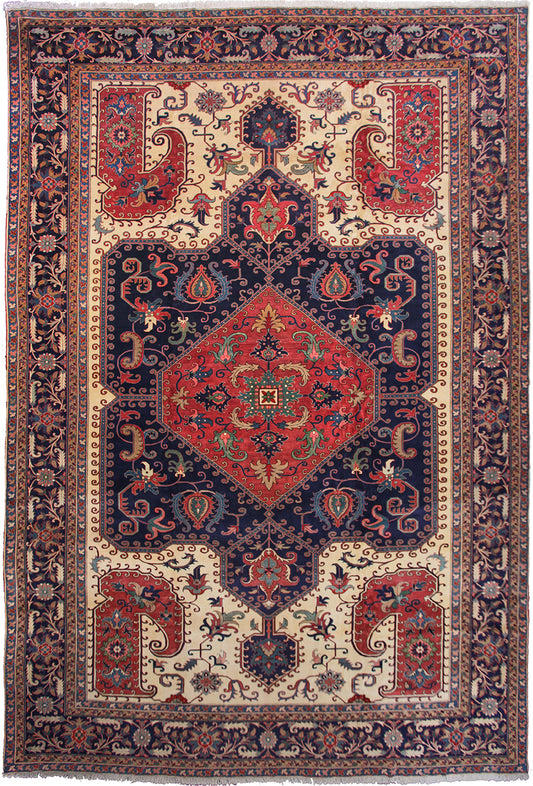
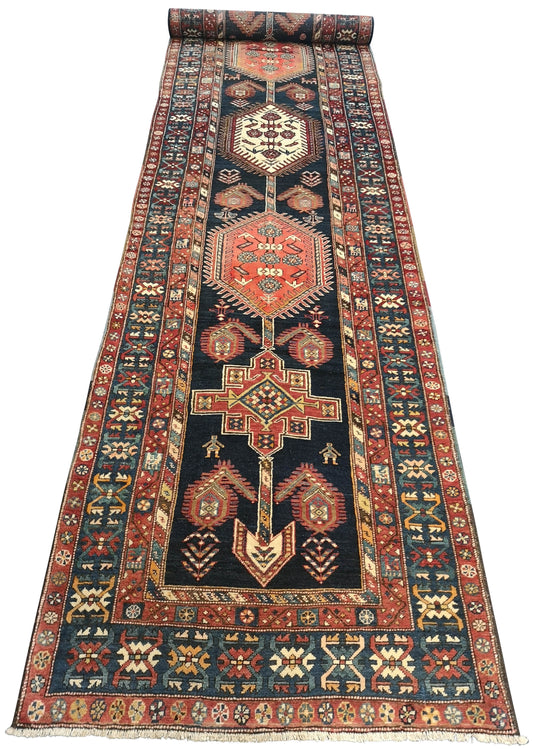
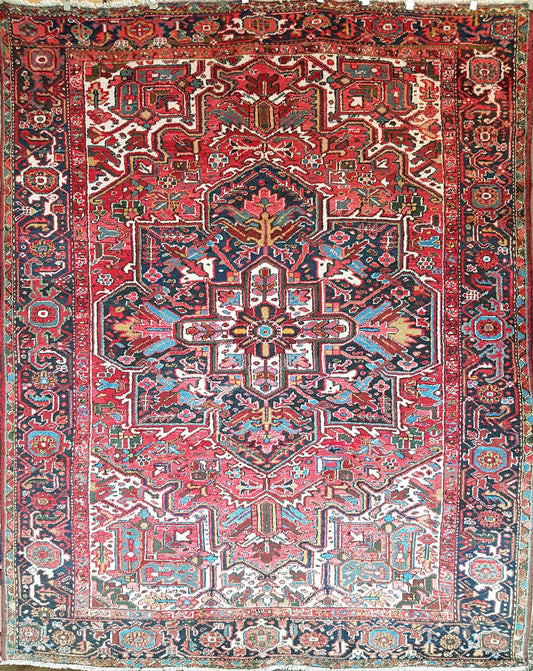
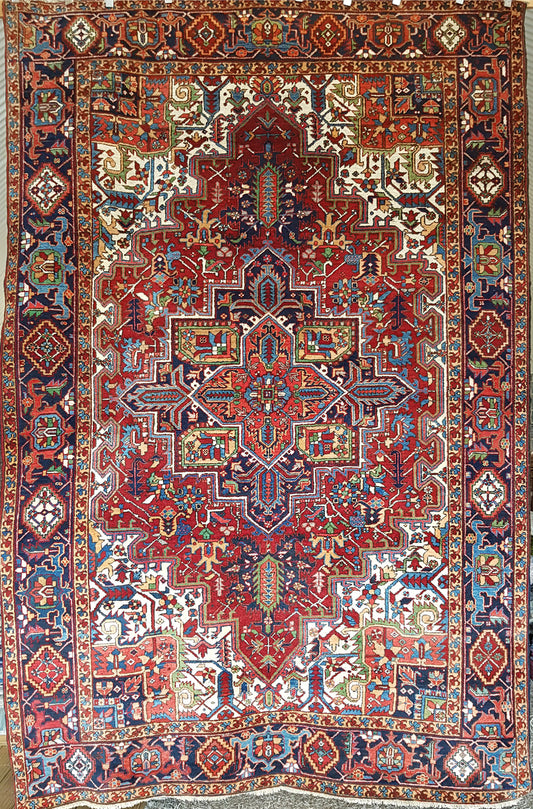
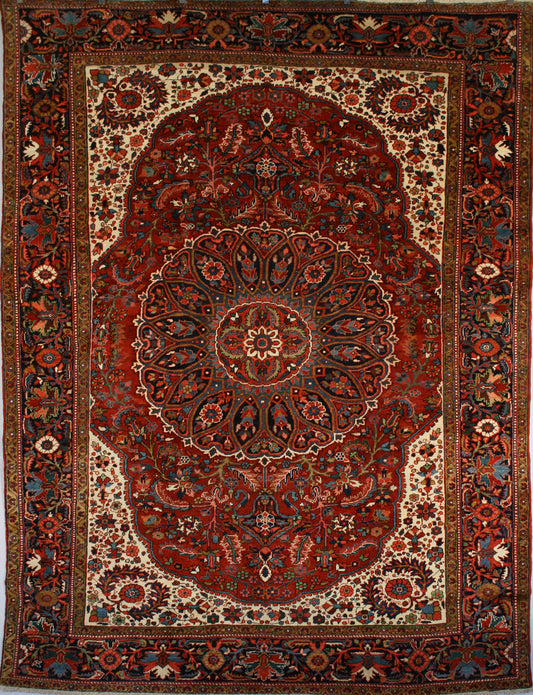
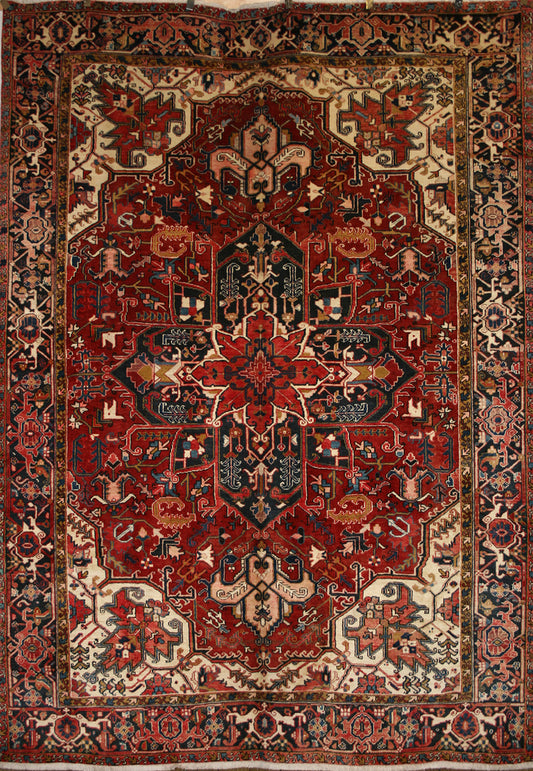
The most familiar Heriz design is built around a large central medallion, often with stepped outlines, angular pendants and strong corner pieces. The field may contain stylised flowers, leaves, vines, rosettes and palmettes, but these motifs are usually drawn with a geometric firmness rather than soft naturalism.
This is one of the great pleasures of Heriz weaving. Floral ideas are present, but they are transformed. A curving vine may become a sequence of angular movements. A leaf may become serrated. A palmette may be simplified and strengthened until it feels almost architectural. The design keeps a Persian identity, but the drawing has the directness of village weaving.
Borders play a major role in this effect. Many Heriz rugs use broad, confident borders with repeating rosettes, vines, angular leaves or palmette forms. In good examples, the border does not simply frame the rug; it gives the whole composition weight and discipline.
Heriz, Serapi, Gorevan and Related Types
Heriz is part of a wider north-west Persian weaving family, and the terminology around it can be complicated. Serapi, Gorevan, Mehraban, Bakshaish and Sarab are often discussed in relation to Heriz, but these names are not always used with perfect consistency across the rug trade.
Serapi is especially important. In many market contexts, Serapi is used for finer, usually older Heriz-region carpets, often with more spacious drawing, a clearer palette and a more refined village character. It should not be treated simply as a completely separate modern town category. It is better understood as a trade term shaped by age, quality, design and regional association.
Gorevan rugs are often described as heavier or more robust within the Heriz family, while Bakshaish pieces may show a freer and more individual village character. These distinctions are useful, but they should not flatten the rugs into rigid labels. As with most Persian weaving areas, individual quality varies from piece to piece.
Colour in Heriz Rugs
Traditional Heriz palettes are rich, grounded and strongly contrasted. Madder red, brick, rust, terracotta, indigo, soft blue, ivory, camel, walnut brown and touches of green or gold are all commonly associated with the type. The best examples use colour to strengthen the design rather than overwhelm it.
Older Heriz rugs often have a softened quality that comes with age. Reds may settle into brick or terracotta, blues can become deeper or quieter, and ivory areas may take on warmth. This ageing can give antique and semi-antique Heriz rugs a particularly attractive balance: still bold, but less sharp than newer production.
Colour also varies within the wider Heriz region. Some pieces are darker and more densely coloured, while finer older examples associated with Serapi or Sarab may feel lighter, more spacious or more open in tone. Newer Heriz rugs can sometimes be brighter and more sharply contrasted, depending on the wool, dyes and finishing.
How to Recognise a Heriz Rug
A Heriz rug is often recognised first by its overall structure. Look for a strong central medallion, angular drawing, substantial borders and a field that feels clearly organised. The motifs may come from the Persian floral tradition, but they are usually rendered in a bolder and more geometric way.
The palette is another clue. Heriz rugs commonly use strong reds, blues, ivory and earthy tones, with enough contrast for the pattern to read clearly across the floor. Older examples may have more mellow and atmospheric colours, while newer pieces can appear brighter.
The handle can also be revealing. Heriz rugs often feel firm, substantial and practical. They usually have a wool pile and cotton foundation, and they tend to feel more robust than fine city carpets. Compared with many tribal rugs, however, they often have a more formal medallion structure and a clearer relationship to classical Persian carpet design.
How Heriz Rugs Work in Interiors
Heriz rugs are particularly effective in rooms that need structure. Their medallions and borders can anchor a sitting room, dining room, entrance hall, study or library, especially where the furniture has weight and the room can carry a strong pattern.
In traditional interiors, a Heriz brings warmth, age and Persian character without becoming overly delicate. It can sit naturally with wood, leather, books, antiques and layered textiles. In more modern interiors, the same angular drawing can feel almost abstract, giving plain walls and simple furniture a sense of depth.

They are also useful rugs for scale. A large Heriz has enough visual strength to hold a generous room, while smaller pieces and runners can bring the same character to hallways, bedrooms, studies or transitional spaces. The key is to give the design enough room to breathe. A strong medallion rug works best when its main forms are not entirely hidden beneath furniture.
Why Heriz Rugs Remain Valued
Heriz rugs remain valued because they combine identity, practicality and decorative power. They are recognisably Persian, but not fragile or overly formal. They have enough structure for serious interiors, enough warmth for family homes, and enough individuality to appeal to collectors.
The best examples are judged by age, condition, wool, colour, drawing and scale. Some are bold and rustic; others are more refined, spacious and subtle. What unites them is a sense of confidence. A Heriz rug usually looks as though it knows where it belongs.
This is why the tradition has endured. Heriz rugs offer the presence of a serious Persian carpet in a form that remains liveable, decorative and highly adaptable. They carry the memory of north-west Iranian village weaving, shaped by the influence of Tabriz but never made subordinate to it.
Explore Heriz Rugs
Our collection of Heriz rugs includes handmade pieces chosen for their design, condition and individual presence. Each rug should be considered on its own merits, with attention to age, colour, drawing, structure and handle, but all belong to a north-west Persian weaving tradition admired for strength, clarity and enduring decorative appeal.
Browse Our Current Selection of Heriz Rugs
-
Persian Heriz Runner Rug
Regular price £1,375Sale price £1,375 Regular priceUnit price perSold -
 Sold
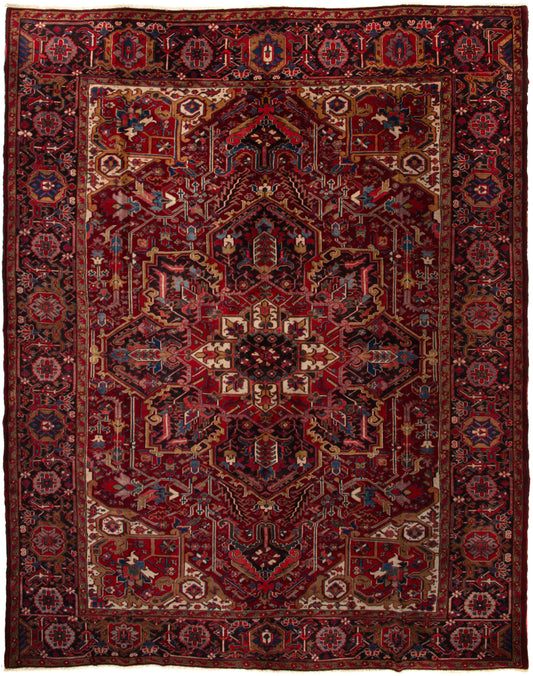
SoldPersian Heriz Rug
Regular price £10,525Sale price £10,525 Regular priceUnit price perSold -
Antique Persian Heriz Rug
Regular price £6,395Sale price £6,395 Regular priceUnit price per -
Persian Heriz Hall Runner Rug
Regular price £1,355Sale price £1,355 Regular priceUnit price per -
Persian Heriz Hall Runner Rug
Regular price £2,315Sale price £2,315 Regular priceUnit price per -
Persian Heriz Rug
Regular price £17,345Sale price £17,345 Regular priceUnit price per -
Antique Persian Heriz Runner Rug
Regular price £3,165Sale price £3,165 Regular priceUnit price per -
Semi-Antique Persian Heriz Rug
Regular price £4,225Sale price £4,225 Regular priceUnit price per -
Semi-Antique Persian Heriz Rug
Regular price £6,355Sale price £6,355 Regular priceUnit price per -
 Reduced
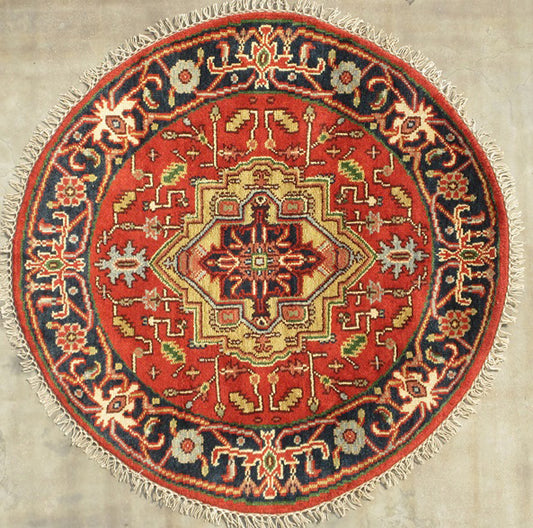
Indian Heriz Round Rug
Regular price £245Sale price £245 Regular priceUnit price per£345Reduced -
Semi-Antique Persian Heriz Rug
Regular price £6,375Sale price £6,375 Regular priceUnit price per -
Semi-Antique Persian Heriz Rug
Regular price £3,715Sale price £3,715 Regular priceUnit price per