Bokhara Rug History & Origin Guide
Bokhara rugs are among the most recognisable of all Central Asian-inspired handmade rugs, but their name needs a little care. Bokhara, or Bukhara, is an ancient city in modern Uzbekistan, long associated with Silk Road trade, Islamic scholarship and the movement of goods across Central Asia. In the rug trade, however, “Bokhara” usually refers less to a single city of production and more to a design tradition shaped by Turkmen weaving, repeated gul motifs and later Pakistani and Afghan interpretation.
This is what makes Bokhara rugs interesting. They carry the memory of Central Asian tribal carpet design, yet many of the examples most familiar to British buyers are not antique Turkmen tribal pieces. They are hand-knotted rugs woven in Pakistan, Afghanistan or neighbouring weaving areas, using a visual language descended from Turkmen carpets and adapted for domestic interiors.
A good Bokhara rug has a quiet sense of order. The repeated guls, balanced borders and often soft wool pile create a pattern that feels formal without being floral, geometric without being harsh, and traditional without needing a grand room. Their appeal lies in rhythm, warmth and recognisable identity.
Where Bokhara Rugs Come From
Bokhara rugs take their name from Bukhara, one of the great historic cities of Central Asia. Set in present-day Uzbekistan, Bukhara stood on the Silk Roads and became a major centre of trade, learning, religion and craft. For centuries, goods moved through its markets from Persia, India, China, the steppe and the wider Islamic world.
For rug history, Bukhara matters as much as a trading name as a weaving place. Carpets and textiles from surrounding regions passed through Central Asian markets, and Western dealers often used broader commercial names for rugs that were woven by Turkmen groups or in areas linked to the Emirate of Bukhara.
This means that a Bokhara rug should not automatically be understood as a rug woven in the city of Bukhara itself. The name has come to describe a family of designs, especially those based on Turkmen gul layouts. Older pieces may be closer to Turkmen tribal weaving, while many later and modern Bokhara rugs were woven in Pakistan and Afghanistan for export markets.
Geographically, the design belongs to the wider Central Asian world: Turkmenistan, Uzbekistan, northern Afghanistan, parts of Iran and later the Pakistani weaving industry. Its history is therefore one of trade, migration, adaptation and commercial naming rather than a simple origin story centred on one town.
The History of Bokhara Rugs
The design roots of Bokhara rugs lie in Turkmen carpet weaving. Turkmen groups such as the Tekke, Yomut, Ersari, Saryk, Salor and Chodor developed highly recognisable geometric carpets, bags, tent furnishings and other woven pieces. Their designs often centred on the gul, a repeated medallion-like motif that could help identify a particular group or weaving tradition.

In the nineteenth century, Turkmen carpets became increasingly known in international collecting and trade circles. Some were identified more precisely by tribal attribution, such as Tekke or Yomut (Yamout). Others were grouped more generally under names associated with Central Asian trade centres, including Bokhara.
As demand for handmade rugs grew in Europe and elsewhere, the Bokhara design language was adopted beyond its original tribal context. Pakistani weaving centres became especially important in the twentieth century. They produced hand-knotted Bokhara rugs with regular layouts, soft wool pile, cotton foundations and colours suited to export markets.
This later production is an important part of the Bokhara story. A Pakistani Bokhara is not the same thing as an antique Turkmen tribal carpet, but it is not simply an imitation without value. At its best, it is a well-made handmade rug that preserves a distinctive Central Asian design vocabulary in a more consistent and domestic form.
How Bokhara Rugs Are Made
Most Bokhara rugs are hand-knotted pile rugs, usually woven in wool. Modern Pakistani Bokharas commonly have a wool pile on a cotton foundation, giving them a stable structure and a soft, even surface. Afghan and older Turkmen-related examples can vary more in handle and construction, reflecting the wider Central Asian weaving traditions behind the name.
The feel of a Bokhara rug is often part of its appeal. Many Pakistani examples have a closely packed, velvety pile, sometimes clipped to a neat and consistent finish. Some are thick and plush, while finer pieces may have sharper drawing, clearer guls and a more controlled surface.
Bokhara rugs are not usually valued in the same way as very fine Persian city carpets, where tiny curvilinear detail and high knot density are often central to the judgement. Their strength lies in the harmony of wool, weave, colour and proportion. A good Bokhara should feel settled and well-made, with clear motifs, balanced borders, sound edges and a surface that carries the design with softness and order.
Patterns and Motifs in Bokhara Rugs
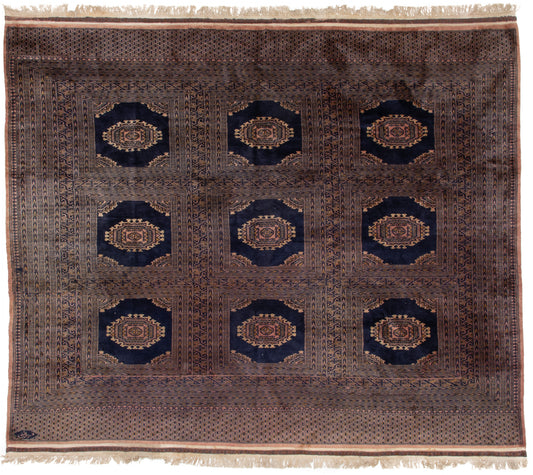
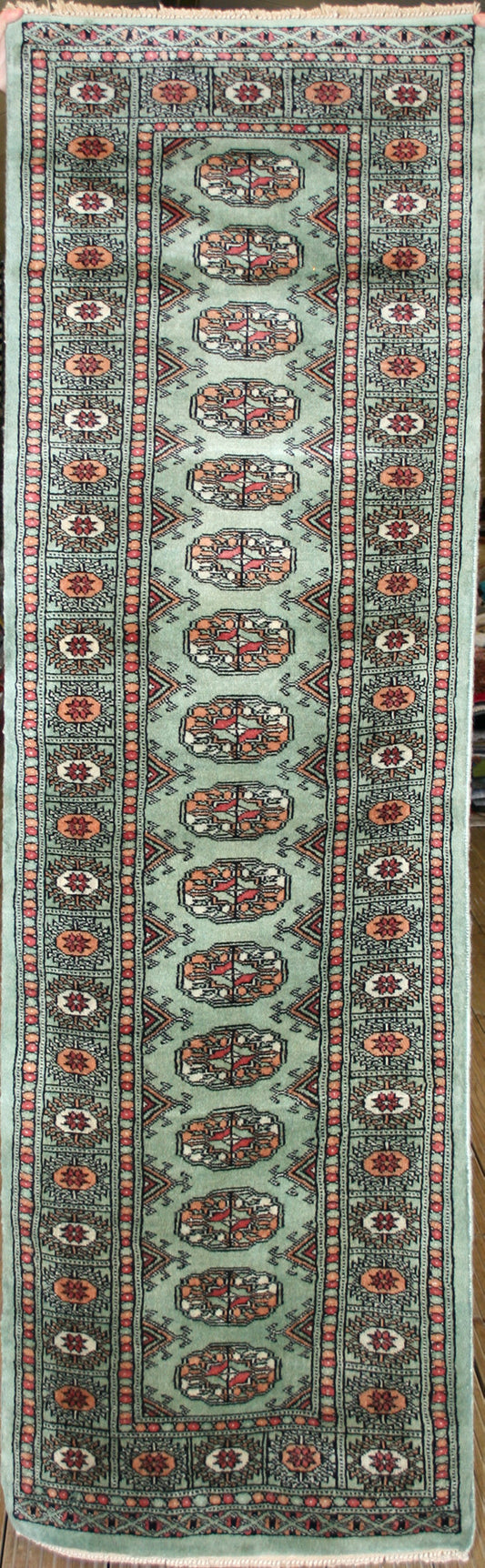
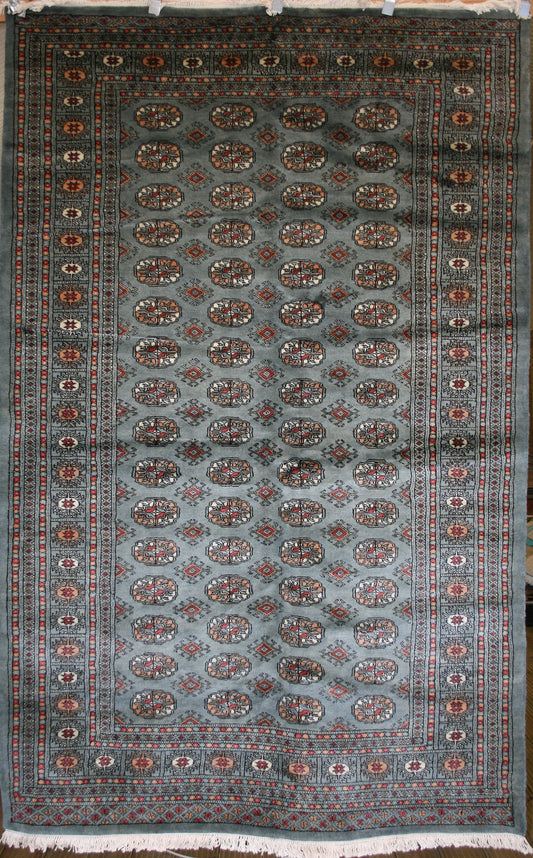
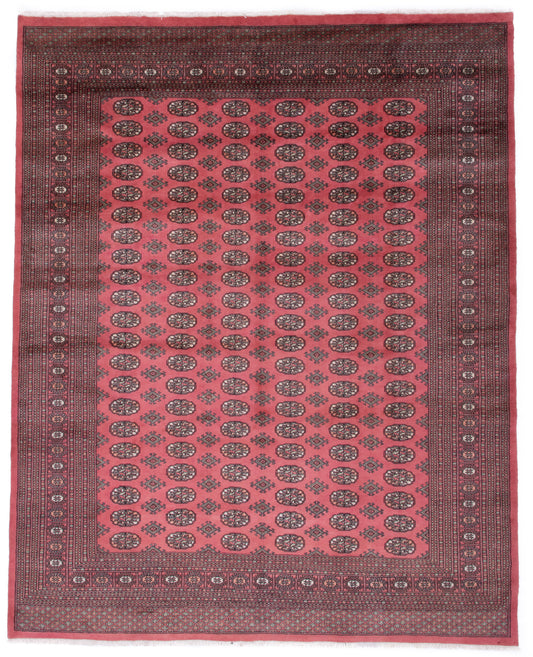
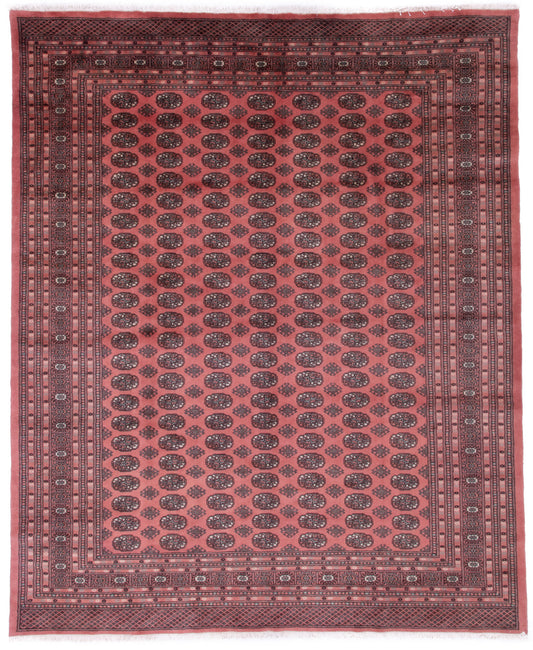
The defining motif of a Bokhara rug is the gul. In Turkmen weaving, a gul is a repeated geometric medallion, often octagonal, oval, diamond-like or quartered. These forms are arranged across the field in orderly rows, creating the regular pattern most people associate with Bokhara rugs.
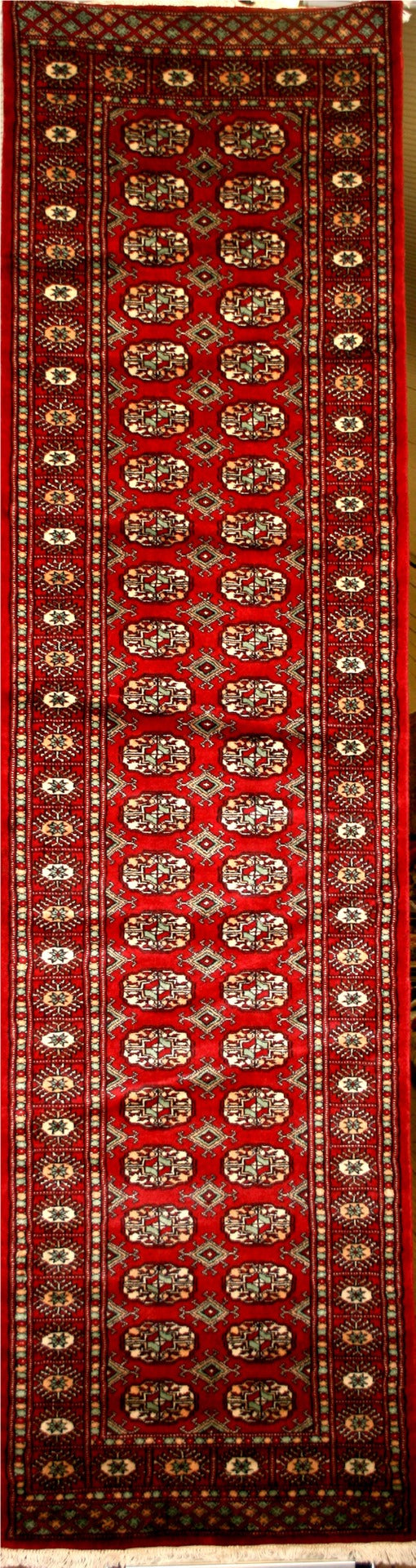
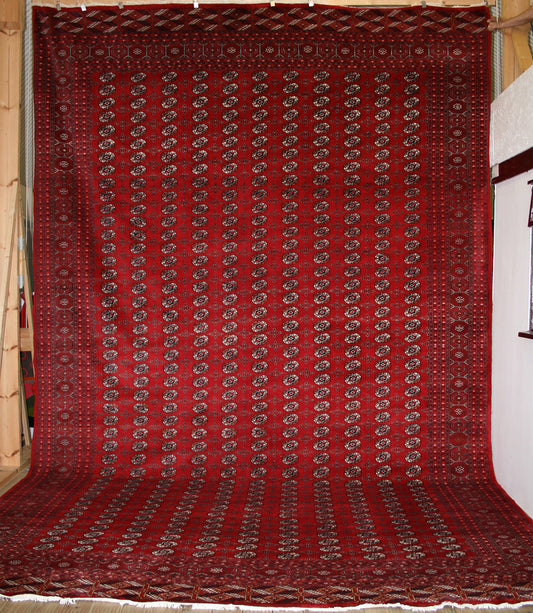
The most familiar Bokhara design is often Tekke-inspired, with rounded or octagonal guls repeated across a red or burgundy field. These guls may be surrounded by smaller secondary motifs, creating a strong but controlled rhythm. Other Bokhara rugs may show Ersari-inspired “elephant foot” guls, diamond forms, compartment designs or more angular variations.
Borders are central to the design. A Bokhara rug usually has a main border supported by several narrow guard borders, often filled with small geometric devices. These borders give the rug a firm frame and keep the repeated field from feeling loose or uncontained.
The design language is geometric rather than curvilinear. Unlike a Kashan, Isfahan or Tabriz, a Bokhara does not usually depend on flowing vines, naturalistic flowers or a grand central medallion. Its beauty comes from repetition, proportion and the subtle differences within a disciplined pattern.
It is tempting to load Bokhara motifs with fixed symbolic meanings, but that should be handled carefully. In original Turkmen contexts, gul forms were culturally meaningful and could relate to tribal identity. In modern Pakistani and Afghan Bokhara rugs, those motifs are often best understood as inherited design forms rather than direct symbolic statements by the weaver.
Colours and Dyes
The classic Bokhara palette is built around red. Deep burgundy, wine, rust, madder-like red, rose and brick tones are especially common, often combined with dark brown, black, ivory, camel, soft blue or touches of green. This gives many Bokhara rugs their warm, settled character.
Older Turkmen pieces often have a more restrained and atmospheric palette, with deep red-browns and limited contrast. Their colours can appear quieter with age, especially where wool, dye and use have softened the surface over time.
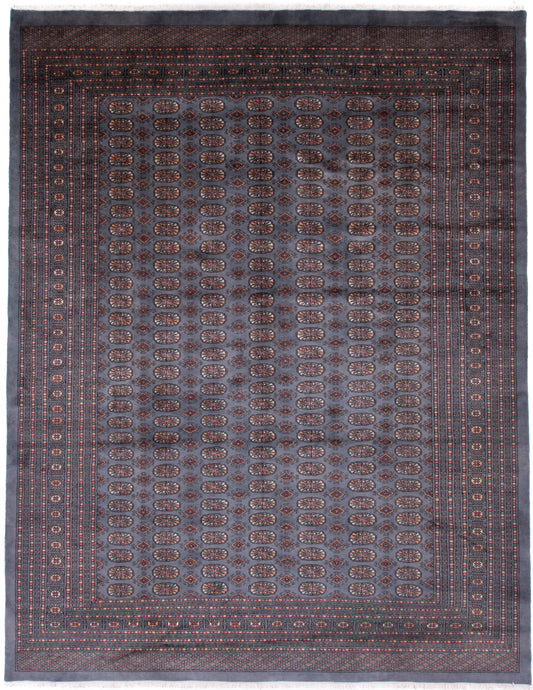
Modern Pakistani Bokhara rugs widened the palette considerably. Alongside traditional red and burgundy examples, they can be found in ivory, beige, green, navy, black, gold, grey and other decorative shades. These colours made the Bokhara design easier to place in contemporary homes while retaining the familiar gul structure.
Natural dye claims should not be applied too broadly. Some older Central Asian rugs may include traditional natural dyes, but many twentieth-century and modern Bokhara rugs use synthetic dyes. This does not automatically make them poor rugs. Colour quality is better judged by harmony, depth, stability and how naturally the palette supports the design.
Types and Variations of Bokhara Rugs
Bokhara is a broad trade term, so it helps to separate the main types. Antique Turkmen rugs are closest to the older source tradition. These may be attributed more specifically as Tekke, Yomut, Ersari, Saryk or another Turkmen group, depending on the gul, border system, structure and age.
Pakistani Bokhara rugs are the most familiar modern type. They are usually hand-knotted with a wool pile and cotton foundation, and were produced in a wide range of sizes for export markets. They often have a soft handle, even finish and regular design, making them easy to use in domestic interiors.
Afghan Bokhara rugs can vary considerably. Some feel closer to Central Asian tribal design, with darker colours and stronger geometry. Others are closer to Pakistani export styles. As with all handmade rugs, the individual piece matters more than the label alone.
Mori Bokhara is a term often used for finer Pakistani Bokhara rugs, usually with more detailed drawing and a more refined finish. Jaldar rugs are closely related in market terms, but their designs often use sharper diamond or lattice-like motifs rather than the rounded gul repetition usually associated with Bokhara.
This range of types is one reason Bokhara rugs can vary so much in price, handle and character. A decorative modern Pakistani Bokhara, a fine Mori Bokhara and an antique Turkmen carpet may all share a broad design ancestry, but they should not be judged as though they are the same object.
How to Recognise a Bokhara Rug
A Bokhara rug is usually recognised first by its repeated field of guls. These motifs are commonly arranged in neat rows, often across a red, burgundy, ivory or dark ground. The pattern is rhythmic rather than pictorial, with no single central medallion dominating the composition.
The borders are another clue. Bokhara rugs often have several narrow guard borders around a more prominent main border, all using small geometric motifs. This gives the rug a layered frame and a sense of architectural order.
The drawing is typically geometric and controlled. Compared with Persian city rugs, Bokhara rugs feel less curvilinear and less floral. Compared with many village Persian rugs, they often feel more repetitive and medallion-based. Compared with older Turkmen tribal pieces, modern Pakistani Bokharas usually feel more regular, softer and more commercially standardised.
Handle can also help. Many Pakistani Bokhara rugs have a soft, dense, velvety pile and a relatively even surface. Older Turkmen pieces may have a more individual handle and structure, sometimes with a different wool character, more variation in spacing and a more complex relationship between motif and tribal attribution.
How Bokhara Rugs Work in Interiors
Bokhara rugs work well in rooms that need warmth, pattern and order. Their repeated gul layout gives structure without the formality of a large Persian floral medallion, making them useful in studies, sitting rooms, bedrooms, dining rooms, hallways and offices.
Red and burgundy Bokhara rugs suit interiors with timber, leather, brass, books, darker painted walls, antique furniture and traditional upholstery. They can make a room feel more grounded without becoming overly grand.

Ivory, green, blue or neutral Bokhara rugs are often easier to place in lighter homes. These examples keep the recognisable pattern but reduce the visual weight, making them useful where a classic red rug would feel too strong.
The repeated design also makes Bokhara rugs practical under furniture. A central medallion rug can lose some of its effect when hidden beneath a table, but a Bokhara’s pattern continues across the field. This makes it particularly useful beneath desks, coffee tables, smaller dining tables and seating groups.
Bokhara runners are especially effective in hallways and corridors. The repeating guls draw the eye along the length of the rug, while the borders give the space a clear edge. In a narrow interior, that combination of rhythm and frame can be very effective.
Why Bokhara Rugs Remain Valued
Bokhara rugs remain valued because they are highly recognisable. The repeated gul field, layered border and warm palette give them a clear identity, even when the exact production origin varies.
They also offer a useful balance between tribal design and domestic decoration. A Bokhara can feel traditional without being ornate, patterned without being busy, and historic in feeling without requiring a formal room.
For collectors, older Turkmen pieces open up deeper questions of tribal attribution, structure, age and design lineage. For many home buyers, Pakistani and Afghan Bokhara rugs offer the appeal of hand-knotted wool, a soft handle and a design rooted in Central Asian carpet culture.
The strongest examples are judged by colour, wool, drawing, proportion, condition and presence. A good Bokhara does not need elaborate explanation to make sense in a room. Its appeal comes from rhythm, tactility and a pattern language that has remained recognisable across generations.
Explore Bokhara Rugs
Exploring Bokhara rugs through detailed photographs, close inspection and comparison is often the best way to appreciate their differences. Our collection of Bokhara rugs includes handmade pieces chosen for their design, condition and individual character, from traditional red and burgundy examples to softer decorative variations suited to contemporary interiors.
Browse Our Current Selection of Bokhara Rugs
-
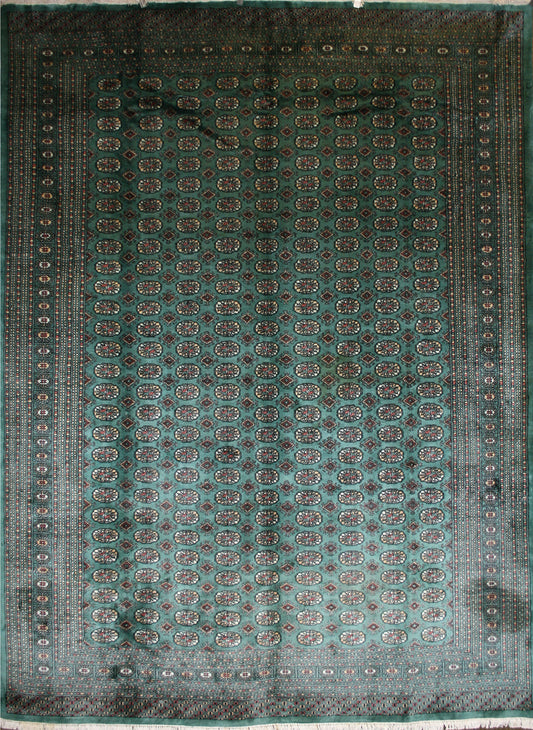
Semi-Antique Pak-Persian Bokhara Square Rug
Regular price £2,545Sale price £2,545 Regular priceUnit price per£5,095Reduced -
 Reduced
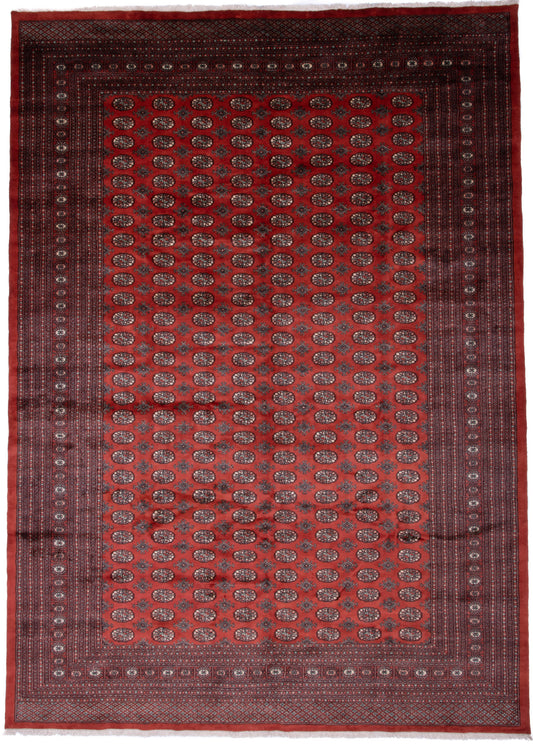
Pak-Persian Bokhara Rug
Regular price £4,675Sale price £4,675 Regular priceUnit price per£5,465Reduced -
 Reduced
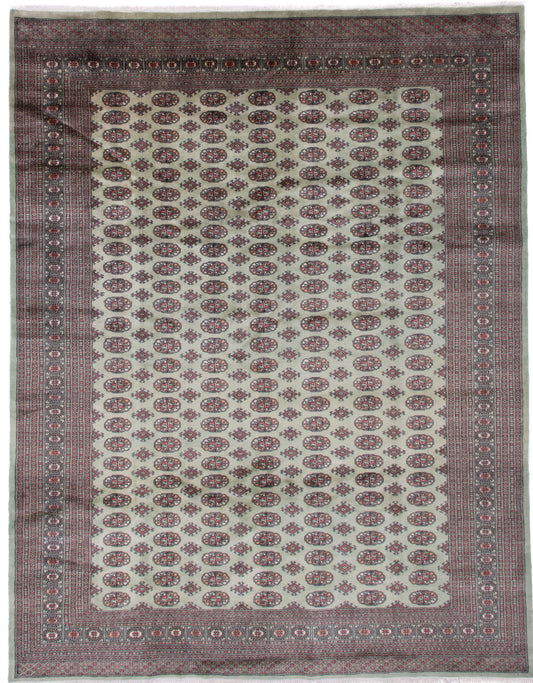
Pak-Persian Bokhara Rug
Regular price £3,455Sale price £3,455 Regular priceUnit price per£4,225Reduced -
 Reduced
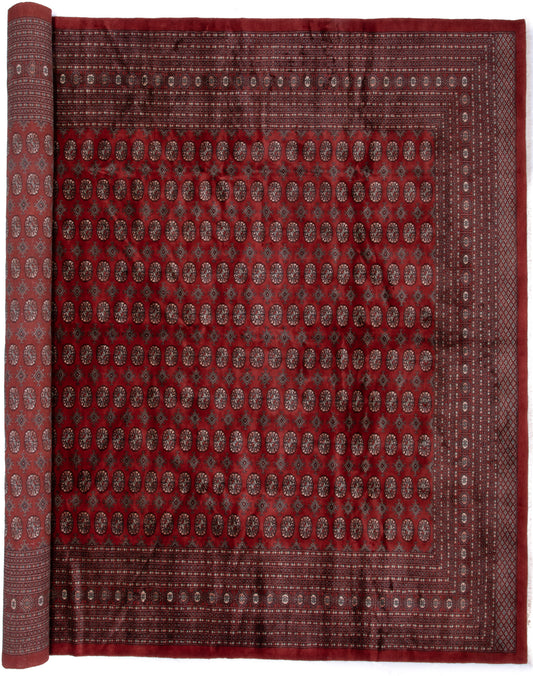
Pak-Persian Bokhara Rug
Regular price £7,225Sale price £7,225 Regular priceUnit price per£8,585Reduced -
 Reduced
Pak-Persian Bokhara Rug
Regular price £2,655Sale price £2,655 Regular priceUnit price per£3,135Reduced -
 Reduced
Pak-Persian Bokhara Rug
Regular price £2,655Sale price £2,655 Regular priceUnit price per£3,185Reduced -
 Reduced
Pak-Persian Bokhara Rug
Regular price £3,585Sale price £3,585 Regular priceUnit price per£4,065Reduced -
Pak-Persian Bokhara Runner Rug
Regular price £505Sale price £505 Regular priceUnit price per -
Pak-Persian Bokhara Rug
Regular price £1,465Sale price £1,465 Regular priceUnit price per -
Pak-Persian Bokhara Runner Rug
Regular price £775Sale price £775 Regular priceUnit price per -
Pak-Persian Bokhara Rug
Regular price £3,715Sale price £3,715 Regular priceUnit price per -
 Reduced
Pak-Persian Bokhara Rug
Regular price £13,385Sale price £13,385 Regular priceUnit price per£15,885Reduced