Bijar Rug History & Origin Guide
Bijar rugs come from one of the most distinctive weaving traditions of western Iran. Woven in and around the Kurdish town of Bijar, in Iran’s Kurdistan province, they are admired for their dense structure, formal Persian designs and unusual strength. Their long-standing nickname, the “Iron Rugs of Persia”, reflects both their physical character and their reputation within the wider world of Persian rugs.
That strength, however, should not be mistaken for coarseness. Many Bijar rugs are finely woven, with intricate drawing, precise repeats and a level of detail that compares well with better-known city-weaving traditions. Their particular character lies in this balance: refinement held within a compact, weighty and disciplined structure.
This guide explores the history, origins, construction and designs of Bijar rugs, and why this Kurdish-Persian weaving tradition has earned such lasting respect.
Bijar and Iranian Kurdistan
Bijar is located in Iran’s Kurdistan province, a region shaped by Kurdish culture, highland landscapes and long-established craft traditions. The rugs woven in and around Bijar belong to the broader Persian rug tradition, but their identity is closely tied to Kurdish weaving.

This distinction matters. Bijar rugs should not be understood in quite the same way as the refined city carpets of Isfahan, Kashan or Qom. Their appeal lies in a different balance: Persian design influence combined with the firmness, density and practical strength often associated with Kurdish craftsmanship.
The Historical Development of Bijar Weaving
Bijar has been an important weaving centre in Iranian Kurdistan for generations, with its carpets becoming especially admired in the 18th, 19th and early 20th centuries. The town and its surrounding villages developed a reputation for rugs of exceptional structure, combining Kurdish weaving knowledge with the formal design language of Persian carpets.
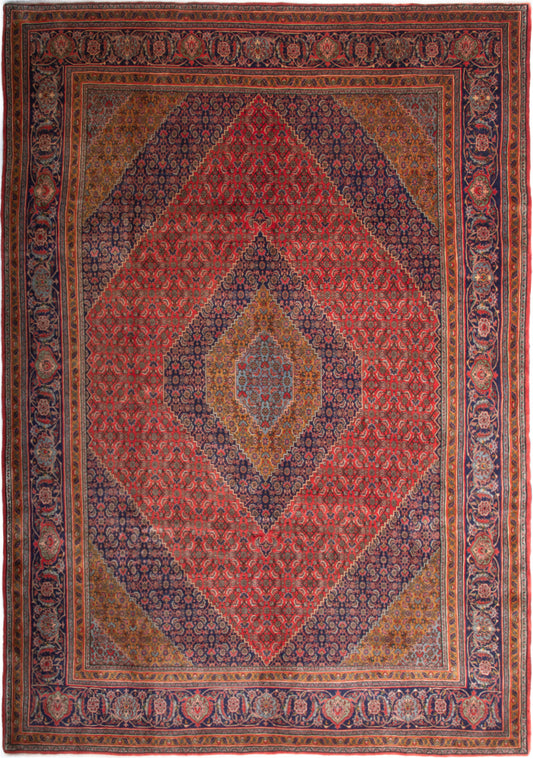
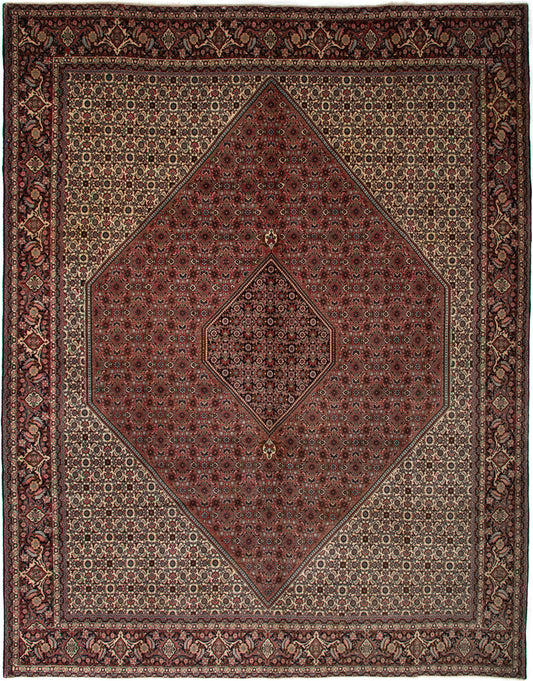
Across this period, Bijar weavers produced both village pieces and more refined workshop-influenced rugs. Some were bold and direct, while others carried intricate medallions, all-over Herati patterns, floral arabesques and finely balanced borders. What united them was not a single pattern, but a recognisable character: dense, disciplined and deeply rooted in the region.
Like many Persian weaving areas, Bijar’s production shifted with trade, politics and changing demand. Yet its reputation endured because the rugs retained a distinct identity - strong in structure, often fine in design, and unmistakably connected to the Kurdish-Persian culture of western Iran.
Why Bijar Rugs Are Called the “Iron Rugs of Persia”
Bijar rugs earned the name “Iron Rugs of Persia” through their exceptionally compact structure. Rows of knots are packed tightly into the foundation, with the wefts beaten down firmly to create a rug that feels dense, solid and substantial in the hand.
This construction gives many Bijar rugs their distinctive handle. They often have a firmer body than more pliable Persian rugs, and older examples in particular can feel almost architectural in structure. Their strength is not simply a matter of thickness or weight, but of how tightly the whole fabric is built.
That density is one reason Bijar rugs have been so highly regarded. It gives them presence, resilience and a sense of permanence, while still allowing for very fine drawing in the best examples.
Construction and Knotting
Bijar rugs are usually associated with wool pile and a closely packed foundation. Older examples may have wool foundations, while later pieces are often woven on cotton warps and wefts. Silk is not a defining feature of Bijar weaving and is comparatively rare.
The structure of a Bijar rug is one of its most recognisable features. The wefts are packed tightly between the rows of knots, sometimes in a more complex arrangement than the standard two-shot structure found in many Persian rugs. This compacting of the foundation helps create the firm, heavy handle for which Bijar is known.
Bijar rugs are commonly associated with the symmetrical knot, sometimes called the Turkish knot. Individual examples can vary, but it would be misleading to describe Bijar rugs generally as Persian or asymmetrically knotted.
The character of a Bijar rug should not be judged by knot count alone. Fineness matters, but so do the density of the weave, the quality of the wool, the clarity of the drawing, the colour, the handle and the condition of the foundation.
Patterns and Designs in Bijar Rugs
Bijar rugs are not defined by one single design. Many use formal Persian layouts, including central medallions, medallion-and-corner arrangements, all-over repeats and richly bordered compositions. Their designs can be floral, geometric or a disciplined combination of both.
Although Bijar rugs are famous for their strength, they should not be thought of as coarse or heavy-handed. Many are finely woven, with intricate drawing and carefully balanced pattern repeats. Small-scale Herati designs, often described in the trade as Mahi or fish designs, are particularly important. These patterns are also strongly associated with fine Tabriz rugs, but in Bijar they take on a different character: compact, rhythmical and held within the region’s famously dense structure.
Other patterns commonly associated with Bijar include Mina Khani, Boteh, Harshang, Shah Abbasi-inspired floral forms, Eslimi arabesques, Gol Farang flowers, vase designs and prayer layouts. Bijar weavers often interpreted established Persian motifs through a firmer Kurdish-Persian drawing style, giving the rugs both refinement and strength.

Garrus and the Wider Bijar Tradition
Garrus, also written Garus, is one of the most important design associations linked with the wider Bijar area. The term refers to a historic district connected with Kurdish weaving and is often used in relation to finely drawn Bijar-region carpets, particularly those with elegant arabesque or floral designs.
Garrus designs are often admired for their balance of structure and movement. They may include scrolling floral forms, split arabesques, rich borders and deep fields, often in strong blues, reds and ivory tones. In the trade, Garrus is sometimes used with care because attribution can be complex, especially with older rugs, but it remains an important part of the Bijar story.
Ornak and Vagireh: Design Memory in Bijar Weaving
One of the more revealing aspects of Bijar weaving is the use of small woven design samples. These are often known as Ornak or, more broadly in Persian rug terminology, Vagireh. Rather than relying only on full drawn cartoons, weavers could use these small samples as pattern references.
This points to a design culture based on memory, repetition and interpretation. A weaver might take a small section of pattern, understand its rhythm, and expand it across a larger carpet. Motifs could be recombined, adjusted and adapted, giving Bijar rugs both continuity and variety.
This helps explain why Bijar rugs can feel traditional without being identical. They often carry familiar Persian motifs, but the drawing, spacing and structure reveal the hand and judgement of local weavers.
Colour and Dyes
Colour is one of the great pleasures of Bijar weaving. Older pieces are often associated with deep indigo, madder red, ivory, camel, walnut brown, soft blue and touches of green, gold or rose. As these colours settle with age, they can give the rug a quieter and more atmospheric character.
Newer Bijar rugs often show a livelier palette, with clear blues, warm reds and orange tones appearing more prominently. This can give modern and later Bijar pieces a brighter, more decorative quality while still retaining the dense structure and patterned discipline associated with the region.

Natural dyes were used in many older Persian rugs, including examples from the Bijar area, with traditional sources such as madder, walnut and pomegranate contributing to the historic palette. Later production also includes synthetic dyes, ranging from harsh to very well handled. In any period, the real test is the harmony of the colour: whether the tones sit comfortably together, support the design and improve with the character of the rug.
Village, Workshop and Regional Character
Bijar rugs can sit somewhere between village and formal Persian weaving. Some have the strength and directness associated with regional production, while others are remarkably fine, with small-scale patterning and a level of detail that compares well with more famous city-weaving traditions. What usually distinguishes Bijar is not a lack of refinement, but the way refinement is combined with density, weight and structure.
This is part of their fascination. A Bijar rug may carry a formal medallion or a recognisable Persian floral pattern, yet still feel more robust and regional than a city carpet. The best examples have a confident balance between order and strength.
Bijar Rugs in Persian Rug History
Within Persian rug history, Bijar occupies a distinctive position. It is not simply a city carpet tradition, nor is it purely tribal. It represents a Kurdish-Persian weaving identity in which technique, material and regional character are closely connected.
The enduring reputation of Bijar rugs comes from this combination. They are admired not only for their structure, but for the way formal design, compact drawing and dense construction work together. A Bijar rug has presence: it feels made for real rooms, real use and long ownership, while still carrying the detail and discipline expected of a serious Persian carpet.
Bijar Rugs Today
Today, Bijar rugs remain highly regarded by collectors, dealers and buyers who value handmade Persian rugs with genuine structural character. Antique and semi-antique examples are often sought after for their colour, weight, age and regional identity, while later pieces can still reflect the strength and visual depth associated with the tradition.
For anyone learning about Persian rugs, Bijar is an important weaving area to understand. Its rugs show how local identity, practical technique and inherited design can come together in a carpet that feels both decorative and deeply rooted.
Explore Bijar Rugs
Our collection of Bijar rugs includes handmade pieces chosen for their character, construction and decorative appeal. Each rug should be considered individually, with attention to age, condition, colour, design, fineness and handle, but all belong to a weaving tradition known for substance, density and enduring presence.
Browse Our Current Selection of Bijar Rugs
-
 Sold
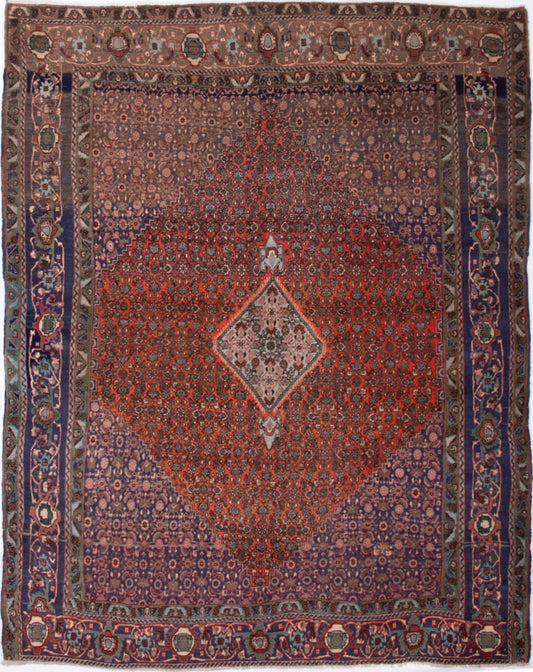
SoldPersian Bijar Rug
Regular price £1,375Sale price £1,375 Regular priceUnit price perSold -
 Sold
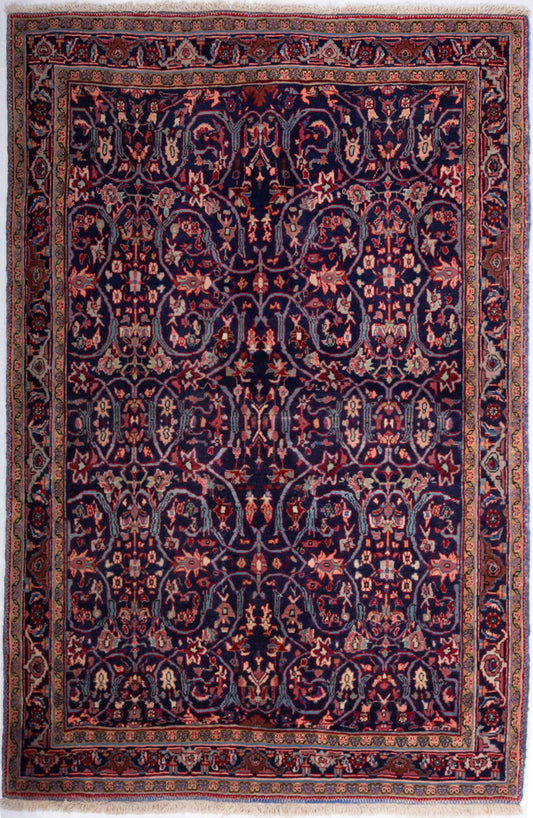
SoldPersian Bijar Rug
Regular price £1,905Sale price £1,905 Regular priceUnit price perSold -
Semi-Antique Persian Bijar Rug
Regular price £10,815Sale price £10,815 Regular priceUnit price perSold -
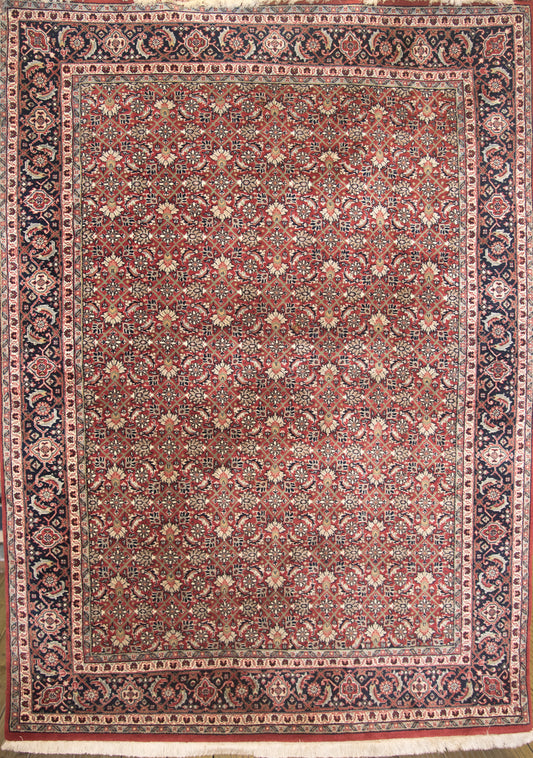 Sold
SoldIndian Bijar Rug
Regular price £1,695Sale price £1,695 Regular priceUnit price perSold -
Persian Bijar Rug
Regular price £5,525Sale price £5,525 Regular priceUnit price per -
Persian Bijar Tekab Runner Rug
Regular price £3,525Sale price £3,525 Regular priceUnit price per -
Antique Persian Bijar Rug
Regular price £3,925Sale price £3,925 Regular priceUnit price per -
Persian Bijar Rug
Regular price £10,395Sale price £10,395 Regular priceUnit price per -
Persian Bijar Tekab Rug
Regular price £9,395Sale price £9,395 Regular priceUnit price per -
Persian Bijar Rug
Regular price £475Sale price £475 Regular priceUnit price per -
Persian Bijar Rug
Regular price £6,355Sale price £6,355 Regular priceUnit price per -
Persian Bijar Hall Runner Rug
Regular price £3,455Sale price £3,455 Regular priceUnit price per